
Candy Match – Driving Long-Term ROAS in Puzzle Games Through Quest Design
About the Client
Sparks Games is a game company that develops and publishes mobile games, primarily focused on casual and puzzle genres.
The company offers a portfolio of titles designed to be easily enjoyed by players across various global markets, with a focus on creating game experiences that are simple to understand and accessible to a wide audience.
By structuring content around repetitive gameplay, Sparks Games enables users to naturally become familiar with the game while maintaining long-term engagement.
Through this approach, the company continues to deliver casual games that can be easily picked up and enjoyed as part of everyday entertainment.
About Candy Match - Dream Factory
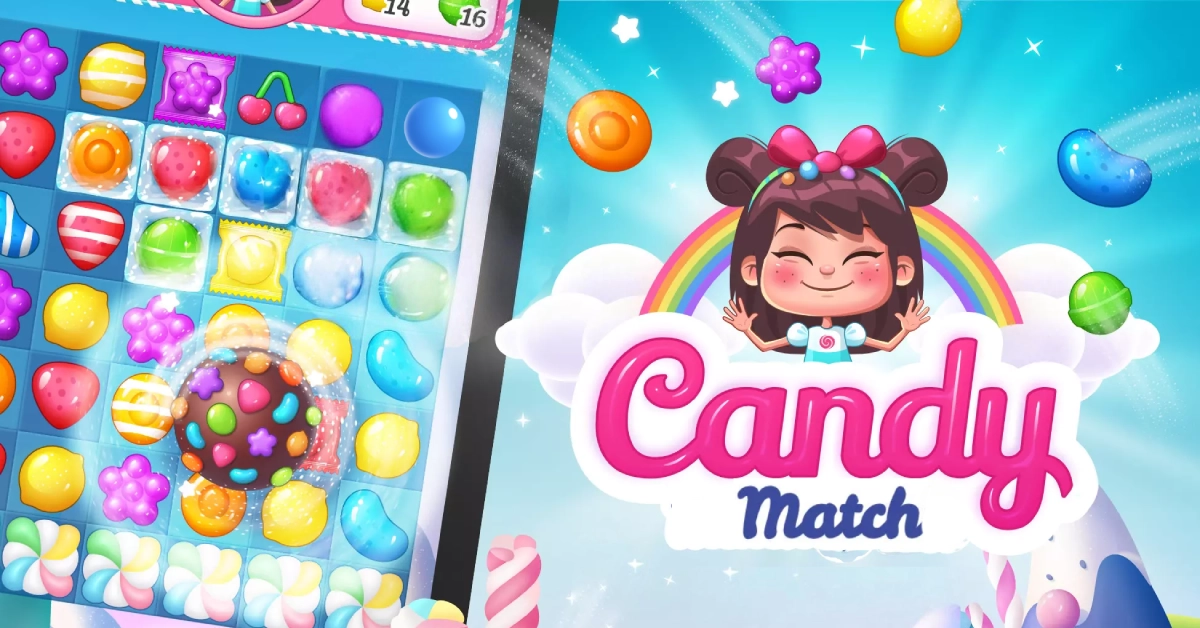
Candy Match - Dream Factory is a match-3 puzzle game where players clear stages by matching candies.
Players connect three or more candies of the same color to solve puzzles, progressing through stages that gradually increase in difficulty.
The game is designed around short, repeatable play sessions, offering a continuous gameplay experience through a wide variety of stages and difficulty levels.
Goals & Challenges
Puzzle games typically have low barriers to entry, making user acquisition relatively easy. However, they also tend to experience rapid early churn, making it challenging to retain users through longer-term monetization phases.
Based on these characteristics, the campaign set the following objectives:
•
Increase initial playtime and stabilize retention
•
Drive repeated engagement to maximize ad exposure and revenue
•
Encourage users to reach deeper stages to extend ROAS beyond early phases
Solution
1. Maximizing Playtime and Engagement Frequency with Time Quests
Time Quests are designed to reward users for spending a certain amount of time in-game, encouraging both longer play sessions and repeated engagement.
For this campaign, the structure was designed as follows:
•
30 minutes of gameplay per session
•
Up to 4 sessions per day (up to 120 minutes total)
•
Continuous participation over 14 days
Rather than simply increasing total playtime, this structure leveraged rewards to naturally encourage extended gameplay.
2. Driving Users Toward Deeper ROAS Stages with Hidden Quests
Hidden Quests reward users upon completing specific in-game actions, guiding them through key gameplay milestones.
To extend monetization into later stages, the campaign implemented the following structure:
•
Diamond collection milestones:
30 → 50 → 70 → 100 → 200 → 300 → 400 → 500 → 600 → 700 → 800
•
In-app purchase quest
Each quest was designed as a step-by-step progression system, allowing users to clearly track their goals and advance through the game accordingly.
This structure encouraged continuous gameplay, naturally leading to both ad engagement and purchase conversion.
3. Bridging Drop-off Gaps with Community Events
Community events were used to further reinforce engagement by offering additional rewards for completing specific objectives and submitting proof of achievement.
The campaign included:
•
Achievement events for reaching levels 10 / 20 / 40
•
Recurring event cycles
In particular, some stages lacked MMP event tracking, making direct user guidance and measurement more difficult.
To address this, community events were used to reinforce user goals in these gaps, helping maintain engagement even in areas where tracking was limited.
As a result, the campaign successfully reduced drop-offs not only between quest stages, but also within tracking gaps, maintaining a continuous gameplay flow.
Results
The campaign achieved strong performance across all three markets:
Metric | D1 Retention | D7 Retention |
KR | 62% | 52% |
JP | 56% | 40% |
TW | 56% | 43% |
Metric | D1 ROAS | D7 ROAS | D14 ROAS | D30 ROAS |
KR | 66% | 150% | 190% | 195% |
JP | 74% | 150% | 184% | 188% |
TW | 73% | 141% | 165% | 168% |
While puzzle games typically generate revenue early due to their gameplay structure, this campaign demonstrated that ROAS can continue to grow beyond the initial phase.
ROAS showed gradual increases even after D14, maintaining a stable performance trend into later stages.
A key factor was not just increasing playtime, but designing a reward structure that sustained long-duration engagement.
By encouraging up to 120 minutes of daily gameplay, the campaign achieved higher ad exposure and purchase conversion without increasing user churn.
Additionally, community events played a critical role in bridging drop-off points between quest stages, contributing to overall retention stability.
This campaign demonstrates that even in casual puzzle games, it is possible to extend the core revenue window beyond early stages through well-structured quest design.
If you have any questions or would like to learn more, feel free to contact us anytime.
Grow with Real Gamers!
Business Inquiries : biz-team@gna.company